The SABRENT HB-PU16 review is for anyone trying to connect a crowded collection of USB-A devices without continually swapping cables.
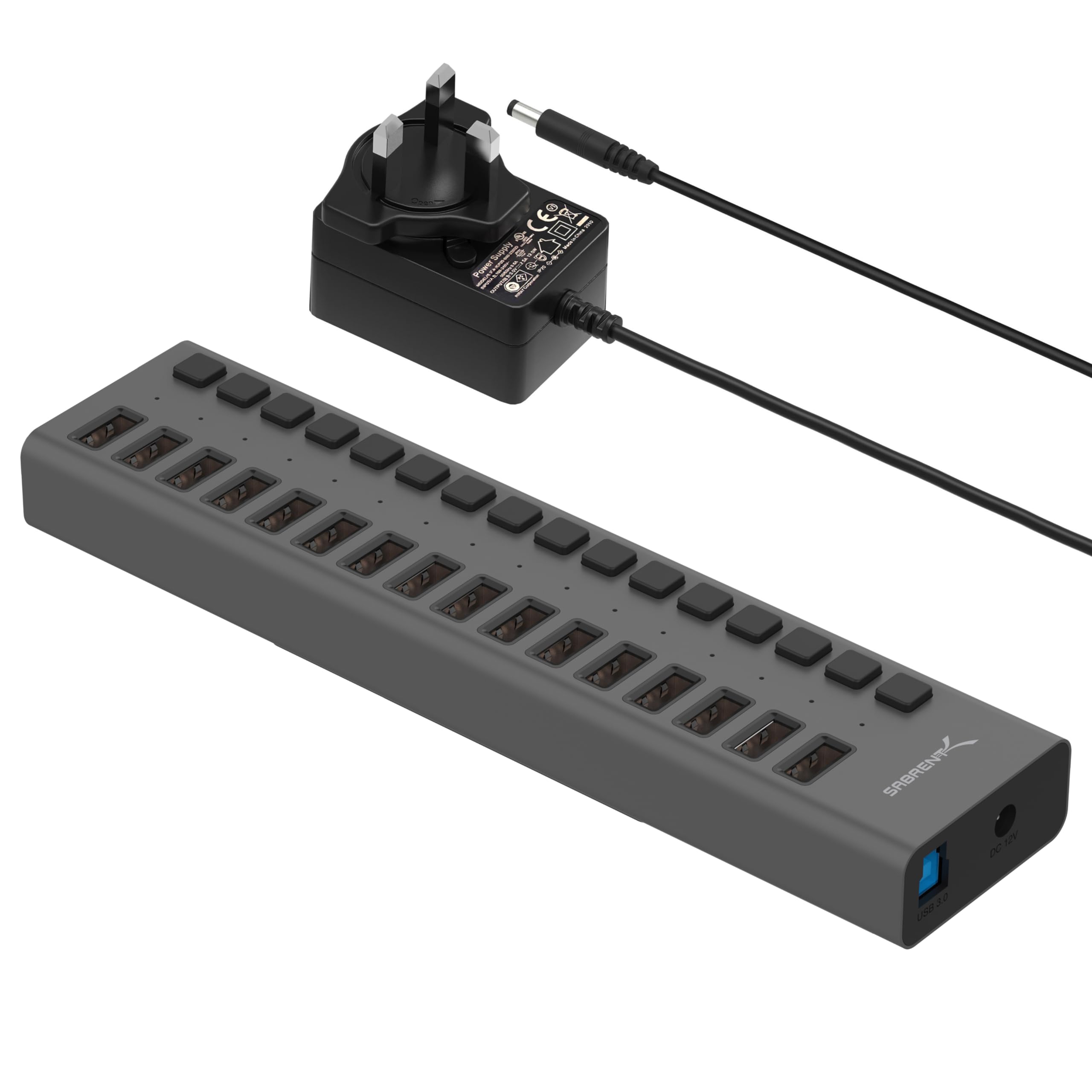
Its 16 USB 3.0 ports, individual power switches, and up to 5Gbps transfer support make it a desk-oriented option for peripherals, storage, and charging.
SABRENT HB-PU16 Review Summary
The quick verdict
1,000+ ratings
Read Amazon ReviewsSABRENT HB-PU16
A practical choice for desktop users who need many USB-A connections, individual port switches, and a powered hub for data devices and charging.
- Sixteen downstream USB 3.0 ports for connecting multiple compatible devices.
- Supports USB 2.0 and USB 1.1 devices, with transmission modes listed from low-speed through super-speed.
- Data transfer speeds of up to 5Gbps for compatible USB 3.0 connections.
- Individual power switches let users control ports separately.

Pros
- Sixteen ports can reduce the need to disconnect one device to make room for another.
- Per-port switches offer a straightforward way to control connected devices individually.
Consider before buying
- The large port count is most useful in a stationary setup; it may be more hub than a small collection of devices requires.
- Its USB-A port design may not directly fit a host or accessory setup centered on USB-C, so check the connections you need before buying.
Read the full review summary
The HB-PU16 focuses on capacity and control: it provides 16 downstream USB-A ports, supports USB 3.0 alongside USB 2.0 and 1.1 devices, and gives each port a blue power-status LED.
Individual switches make it easier to control which connected devices are powered, while plug-and-play and hot-swappable operation are intended to keep setup simple.
It suits a desktop or workstation where many compatible USB devices need a shared connection, especially flash drives, card readers, external hard drives, and other peripherals.
The key buying question is whether you need this many ports and its USB-A format; buyers seeking a compact travel hub or a modern USB-C docking station should look for a different layout.
The buying factors
SABRENT HB-PU16 Scorecard
Editorial scores reflect listed features and buyer fit; they are not laboratory measurements or customer ratings.
Port capacity
Sixteen downstream ports offer room for a notably large set of connected USB devices.
Device compatibility
USB 3.0 ports also support USB 2.0 and USB 1.1 transmission standards.
Transfer potential
The hub supports data transfer up to 5Gbps, appropriate for compatible USB 3.0 devices.
Port control
Individual switches and blue status LEDs provide per-port control and a quick power-status cue.
Setup simplicity
Plug-and-play and hot-swappable operation are designed to avoid a complicated installation.
Format flexibility
Its 16-port USB-A focus is useful for many peripherals, but buyers should confirm it matches their host and cable setup.
Key Features and Specifications of SABRENT HB-PU16
- Sixteen downstream USB 3.0 ports for connecting multiple compatible devices.
- Supports USB 2.0 and USB 1.1 devices, with transmission modes listed from low-speed through super-speed.
- Data transfer speeds of up to 5Gbps for compatible USB 3.0 connections.
- Individual power switches let users control ports separately.
- Blue LED indicators show power status for each port.
- Plug-and-play and hot-swappable operation are intended to make adding or changing devices straightforward.
- Designed for USB peripherals including flash drives, card readers, external hard drives, and devices connected for charging.
Pros and Cons of SABRENT HB-PU16
Pros
- Sixteen ports can reduce the need to disconnect one device to make room for another.
- Per-port switches offer a straightforward way to control connected devices individually.
- USB 2.0 and USB 1.1 compatibility accommodates older devices as well as USB 3.0 peripherals.
- The listed 5Gbps maximum supports faster data connections when the attached device and host also support USB 3.0.
Consider before buying
- The large port count is most useful in a stationary setup; it may be more hub than a small collection of devices requires.
- Its USB-A port design may not directly fit a host or accessory setup centered on USB-C, so check the connections you need before buying.
- The up-to transfer rate is a maximum supported figure, not a guarantee that every connected device will transfer at that rate.
Who Should Buy SABRENT HB-PU16?
Good fit
Consider the HB-PU16 if your desk regularly has many USB-A devices connected at once.
External drives, card readers, flash drives, and other peripherals can share the hub, while the individual switches and status lights add convenient control when you want to manage connections port by port.
It is also a reasonable fit if you use a mix of newer and older USB devices.
Before choosing it, count the devices you expect to keep connected and check that the host connection and available space in your setup work with a 16-port hub.
Who should skip it
Skip this model if you only need a few ports or want a compact hub to carry between locations; its main appeal is high port capacity for a crowded setup.
Look elsewhere if your priority is a USB-C dock with features such as display output, Ethernet, or card slots. Those needs are different from this model's stated focus on USB-A peripheral connections.
How the SABRENT HB-PU16 Fits a High-Port-Count Setup
Capacity for many devices
The defining feature is the 16-port layout. That makes the hub relevant to desks with several peripherals or storage devices, where frequent unplugging can become inconvenient.
Its value depends on how many devices you actually use: for a small setup, the extra ports may go unused.
Speed depends on the whole connection
The hub supports transfer rates up to 5Gbps and lists compatibility with USB 2.0 and USB 1.1 devices.
That gives it flexibility across device generations, but a device or host using an older standard will operate according to its own supported mode.
Treat 5Gbps as a ceiling for compatible connections rather than an expectation for every transfer.
Per-port control and visibility
Separate switches and blue power-status LEDs help make a multi-device arrangement easier to manage. You can see each port's power status and control ports individually, which may be useful when several devices stay connected.
These controls add convenience, though they do not change the capabilities of the attached device.
Check fit with your desk and devices
This is a USB-A-focused hub built around a large number of downstream connections. Before buying, confirm that the devices you want to attach use compatible connections and that the hub suits your host setup.
Buyers who need video, network, or memory-card features should make sure their chosen hub specifically includes them.
Alternatives to SABRENT HB-PU16
USB Hubs alternative
6,000+ ratings
Read Amazon ReviewsSABRENT HB-B7C3 10-Port USB 3.0 Hub
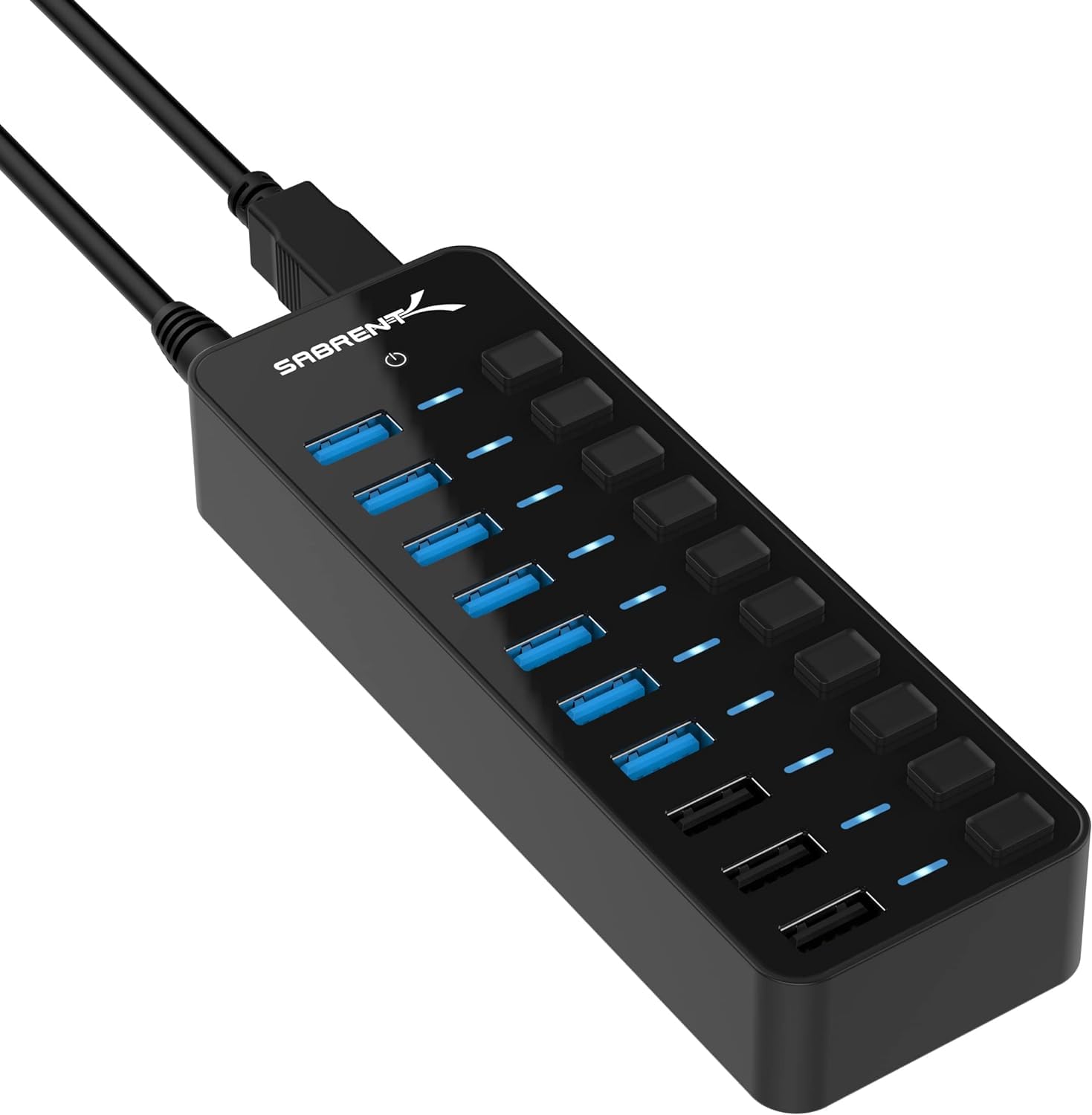
Choose the HB-PU16 when the larger 16-port count is the priority. The HB-B7C3 may fit better when seven data connections are enough and dedicated charging ports with a listed adapter are more useful.
- The HB-B7C3 supports up to seven USB 3.0 devices at once, has individual switches and LEDs, and includes three dedicated charging ports rated up to 2.4A per port.
- Its package includes a 60W power adapter.
- The HB-PU16 provides 16 USB 3.0 ports, individual power switches, and blue power-status LEDs.
USB Hubs alternative
188,000+ ratings
Read Amazon ReviewsSABRENT HB-6PNV USB-C Hub and M.2 SSD Dock
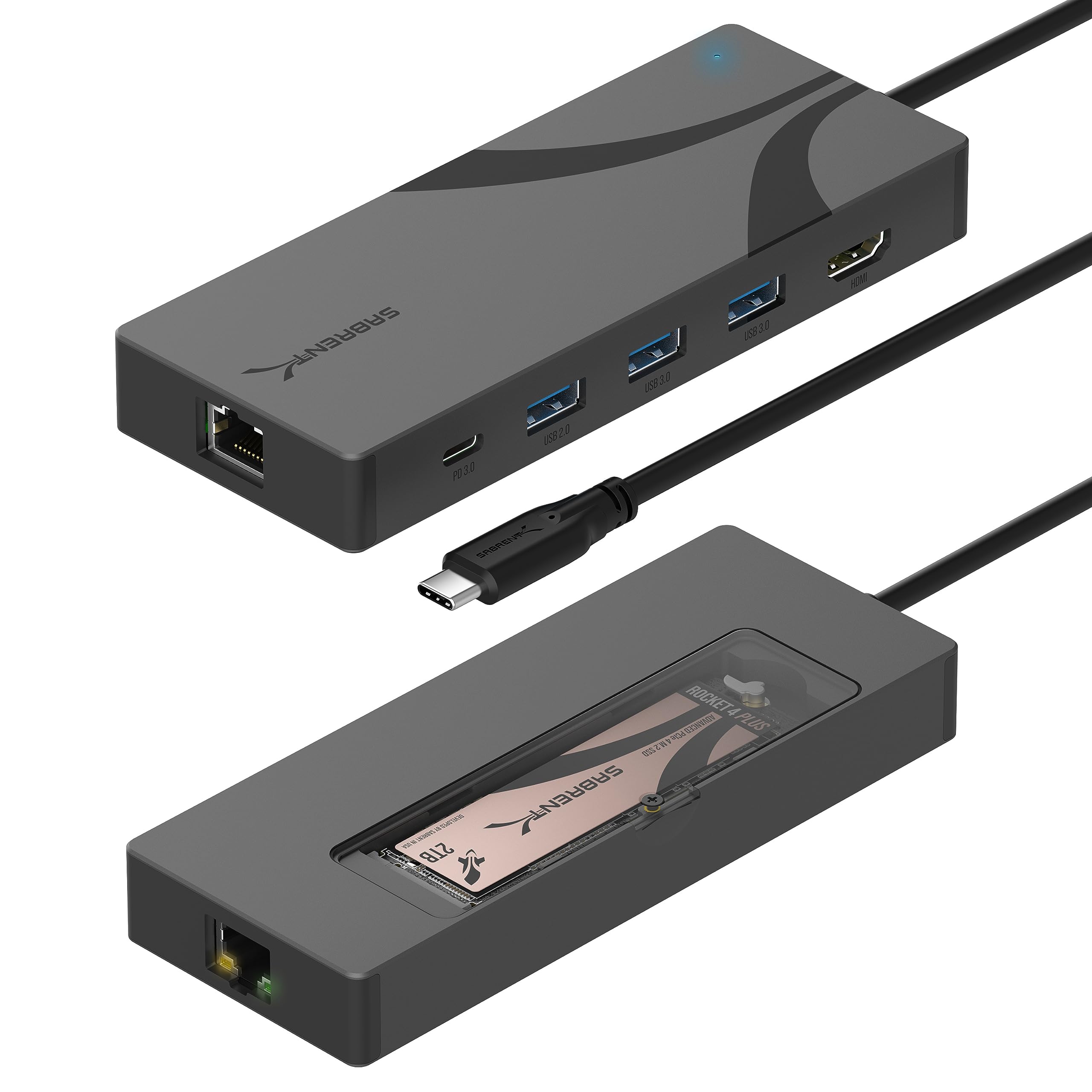
The HB-6PNV is a better fit for someone who wants a compact USB-C dock combining storage, display, and wired networking. Choose the HB-PU16 for its 16-port USB-A capacity when connecting many peripherals is the main need.
- The HB-6PNV is a six-port USB-C hub with an M.2 SSD enclosure, HDMI output up to 4K at 60Hz, Gigabit Ethernet, and up to 90W USB Power Delivery pass-through to a host.
- Its M.2 slot runs at up to 5Gbps, and a USB-C host needs DisplayPort Alternate Mode for video.
- The HB-PU16 emphasizes a high count of USB 3.0 ports for connecting peripherals and storage devices.
Is SABRENT HB-PU16 Worth It?
The SABRENT HB-PU16 is worth considering when a desktop setup needs a high number of USB-A connections, individual port switches, and compatibility across USB 3.0, 2.0, and 1.1 devices. Its central strength is capacity with simple per-port control.
Buy it if you expect to use many of its ports and have checked that its USB-A layout fits your host and peripherals.
If your setup needs only a few connections or calls for a USB-C dock with additional display or network functions, a more specialized hub will be a closer match.
Your review at a glance
1,000+ ratings
Read Amazon ReviewsSABRENT HB-PU16
A practical choice for desktop users who need many USB-A connections, individual port switches, and a powered hub for data devices and charging.
- Sixteen downstream USB 3.0 ports for connecting multiple compatible devices.
- Supports USB 2.0 and USB 1.1 devices, with transmission modes listed from low-speed through super-speed.
- Data transfer speeds of up to 5Gbps for compatible USB 3.0 connections.
- Individual power switches let users control ports separately.